
A practical guide to hemp derived CBD, minor cannabinoids, the endocannabinoid system and the real science behind full spectrum hemp.
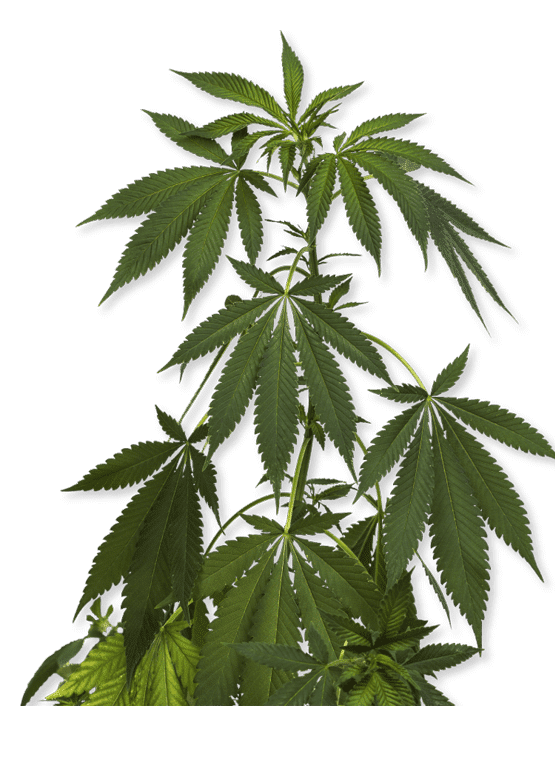
Woke Botanicals makes wellness products from hemp. Our products are not marijuana products, and they are not designed to produce a high. Hemp and marijuana belong to the same Cannabis sativa plant family, but they are cultivated, regulated and used differently. Hemp is naturally rich in non-intoxicating cannabinoids such as CBD and CBG and contains only limited amounts of intoxicating THC.
The word cannabis describes the wider plant family. The word hemp tells you which part of that family this article and Woke Botanicals are concerned with. We use cannabis only when discussing the plant family or the science shared by hemp and marijuana. When we discuss our ingredients and products, we mean hemp and hemp-derived cannabinoids.
CBD helped move the conversation away from intoxication and toward health. A 2022 randomized crossover trial found that single oral doses of 15, 300 and 1,500 milligrams of purified CBD did not measurably impair simulated driving or cognitive performance in 17 healthy adults. That small study does not prove that every hemp product is safe for every driver, but it supports the central point: CBD itself is not an intoxicant.
Non-intoxicating does not mean inert, risk-free or magical. People use CBD because they expect an effect. A substance can influence mood, stress responses, sleep or perception without causing a high. Caffeine is psychoactive. So are many prescription medicines. The accurate description for CBD is non-intoxicating.
CBD is not another name for hemp. CBD, short for cannabidiol, is one molecule produced by the hemp plant. Hemp can contain CBD, CBDA, CBG, CBC, trace THC and many other compounds. Marijuana is generally cultivated for higher concentrations of intoxicating THC. Woke Botanicals does not add intoxicating THC to turn a hemp wellness product into a recreational product.
A product labeled CBD may contain purified CBD alone, a broad spectrum hemp extract or a full spectrum hemp extract that retains more of the plant’s original chemistry. Woke’s full spectrum approach is about preserving the useful complexity of hemp, not manufacturing a high.
The hemp plant mostly makes acidic cannabinoids first. CBGA acts as a chemical starting point from which the plant forms THCA, CBDA and CBCA. Heat and time remove a carboxyl group in a process called decarboxylation. THCA becomes THC, CBDA becomes CBD and CBCA becomes CBC. This chemistry occurs across the cannabis plant family, but the cannabinoid proportions differ greatly among plant varieties and finished products.
The endocannabinoid system is a signaling network found throughout the brain and body. It includes cannabinoid receptors, naturally produced endocannabinoids and the enzymes that make and break those molecules down. Two well-known endocannabinoids are anandamide and 2-AG. The best-studied receptors are CB1, found abundantly in the nervous system, and CB2, associated largely with immune tissues but also present elsewhere.
The system does not exist because cannabis exists. It is part of human physiology. Researchers describe it as a regulatory network that helps tune neuronal activity and participates in processes involving appetite, pain signaling, stress responses, memory, immune function and sleep-wake regulation. It is better to think of it as a dimmer system than an on-off switch. Its job is modulation, and different cannabinoids influence that network in different ways.
THC binds directly to CB1 and CB2 receptors as a partial agonist. Its activity at CB1 helps explain intoxication, altered perception and appetite effects. CBD works far less directly. It influences several molecular targets and may change CB1 signaling rather than simply switching the receptor on. That difference is a major reason CBD and THC do not feel the same.
| Compound | Intoxicating | What researchers are studying | What the evidence allows us to say |
| CBD | No | Seizure disorders, anxiety, inflammation, pain, sleep and drug interactions | Purified prescription CBD is approved for specific seizure disorders. Evidence for general wellness uses varies greatly by condition, dose and product. |
| CBDA | No | Nausea, inflammation, seizure activity and serotonin signaling | Promising laboratory and animal research exists, but controlled human evidence remains limited. Heat converts CBDA to CBD. |
| CBG | Usually no | Anxiety, stress, mood, pain and inflammatory pathways | Early human studies are small. One 2024 trial found reduced self-reported anxiety and stress after 20 mg CBG without intoxication or impairment, but replication is needed. |
| CBN | Low or unclear | Sleep and sedation | The reputation of CBN as a sleep cannabinoid grew faster than the evidence. Recent small trials are encouraging, but dose, formulation and long-term effects remain unsettled. |
| THCA | No before heating | Inflammation, nausea, neuroprotection and seizure activity | THCA may occur in hemp, but it converts to intoxicating THC with heat and during storage. Most health evidence remains preclinical. |
| THCV | Dose dependent | Appetite, metabolism, glucose regulation and neurological effects | THCV can occur in hemp in small amounts. Human evidence is limited, and it is not a proven weight-loss treatment. |
| THC | Yes | Pain, nausea, appetite, spasticity and sleep | THC is the compound most associated with marijuana and intoxication. Full spectrum hemp can contain only limited trace amounts, which is very different from a high-THC marijuana product. |
| CBC | No | Pain, inflammation and nervous-system effects | Research is still largely laboratory and animal based. Human clinical evidence is sparse. |
CBD is sometimes called non-psychoactive, but that phrase is imprecise. People use CBD because they expect an effect. Non-intoxicating is the better description: CBD does not activate CB1 receptors the way THC does and does not produce the characteristic cannabis high.
There is one major clinical fact that should anchor the discussion. The FDA has approved a purified CBD medicine for seizures associated with Lennox-Gastaut syndrome, Dravet syndrome and tuberous sclerosis complex. That is strong evidence for a specific pharmaceutical product, at studied doses, for specific conditions. It is not proof that every hemp-derived CBD oil treats epilepsy, anxiety, pain or insomnia. Formulation, dose, absorption and quality control all matter.
CBD can also cause drowsiness, diarrhea, appetite changes and liver enzyme elevations, and it can change how the body processes certain medicines. Anyone taking prescription medication, especially medicines with a narrow safety range, should speak with a clinician or pharmacist before using concentrated cannabinoid products.
THCA can occur in the wider cannabis plant family, including in hemp. It is the acidic precursor to THC. THCA has little activity at CB1 and does not create the familiar marijuana high in its unheated form. Heating it through smoking, vaping, baking or another process removes part of the molecule and converts it to THC. Conversion can also happen gradually with time, light and heat.
THCA is being studied for anti-inflammatory, anti-nausea, neuroprotective and anticonvulsant potential. Most of that evidence comes from cells and animals rather than large, controlled human trials. Calling THCA non-intoxicating is chemically reasonable before decarboxylation. Calling it a proven treatment is not.
THCV is a minor cannabinoid that may occur in hemp as well as higher-THC cannabis varieties. It has been promoted as an appetite suppressant and metabolic shortcut. The science is more interesting and less convenient. THCV can behave differently at cannabinoid receptors depending on dose. At lower doses it may oppose some CB1 activity; at higher doses it may act more like an agonist.
Researchers are studying THCV in relation to glucose regulation, appetite, weight and neurological conditions. Small clinical studies have produced signals worth following.
Hemp contains a mixture of cannabinoids, terpenes and other plant compounds. Studying CBD alone tells us about CBD; it does not necessarily tell us how a broader hemp extract behaves. The entourage effect describes how compounds within that mixture can influence one another’s activity.
There is experimental evidence behind this idea.
In a 2021 study, researchers found that several cannabis terpenes—including linalool, geraniol, α-humulene and β-pinene—produced cannabinoid-like effects in mice and enhanced selected effects of a synthetic cannabinoid receptor agonist. These were laboratory and animal experiments, providing evidence that terpenes can contribute biological activity beyond aroma.
A 2023 laboratory study tested sixteen terpenes and found that some increased THC’s activation of the CB1 receptor. Certain combinations produced activity greater than the individual components added together: evidence of synergy in that experimental system. The researchers observed amplification at some terpene-to-THC ratios resembling those found in the plant.
There is human evidence, too. In a 2024 double-blind study involving twenty adults, researchers tested vaporized THC with the terpene d-limonene. In the twelve participants who received the highest combination—30 mg THC with 15 mg d-limonene—ratings of anxiety and paranoia were significantly lower than with 30 mg THC alone. Other measured THC effects were unchanged. This demonstrates a specific terpene–cannabinoid interaction in people under the conditions tested.
These findings support taking the plant’s chemical mixture seriously. Results differ across compounds and experiments, however: other receptor studies have found no enhancement with the combinations they tested. The useful question is which compounds work together, at what concentrations, through which pathways and for which outcomes.
For hemp wellness, this gives a scientific rationale for investigating full-spectrum formulations. It does not establish that every full-spectrum product outperforms an isolate, or that results from inhaled THC combinations automatically apply to an oral CBD product.
At Woke Botanicals, our preference for full-spectrum hemp reflects our respect for the plant’s naturally occurring complexity. We grow organically and use cold-pressed extracts. The entourage research helps explain why preserving that complexity deserves attention—and why understanding hemp requires looking beyond a single cannabinoid.
Health-conscious consumers should demand the same basic discipline from hemp that they expect from food, supplements and skincare. A trustworthy product should have a current, batch-specific certificate of analysis from an independent laboratory. The report should confirm cannabinoid potency and screen for contaminants relevant to the product, including pesticides, heavy metals, microbes and residual solvents where applicable.
Full spectrum hemp can contain trace THC. That amount may be too low to feel, yet repeated use can still matter for a drug test. Labels such as THC-free, broad spectrum and full spectrum are not substitutes for the laboratory report. Read the numbers.
Hemp wellness should not be built around chasing a high or attaching a miracle claim to every newly fashionable molecule. It should begin with a clear goal, a known product, a sensible dose and honest expectations. Start low, change one variable at a time and pay attention to how your body responds. More milligrams do not automatically mean a better result.
The future of hemp health lies in responsible cultivation, careful extraction, transparent testing and research that respects the plant without romanticizing it. CBD helped open that door. Minor hemp cannabinoids are giving researchers many more questions to explore. The smartest response is neither fear nor hype. It is curiosity backed by evidence.
Hemp-derived cannabinoids can interact with medications and may not be appropriate during pregnancy or breastfeeding, before driving, for children without medical supervision, or for people with certain liver, heart or psychiatric conditions. Products containing intoxicating amounts of THC can impair judgment and coordination. Keep all cannabinoid products away from children and pets. This article is educational and is not medical advice.
Science Confirms You Cannot Get High on CBD. Cannabis Now. A useful public-facing starting point on CBD and intoxication, read alongside the original study and safety guidance below.
Effects of cannabidiol on simulated driving and cognitive performance. Journal of Psychopharmacology via PubMed. Randomized crossover study of 17 adults receiving placebo or 15, 300 or 1,500 mg CBD.
Review of the Endocannabinoid System. Biological Psychiatry Cognitive Neuroscience and Neuroimaging via NIH. Review of endocannabinoids, receptors, enzymes and nervous-system signaling.
What to Know About Products Containing Cannabis and CBD. U.S. Food and Drug Administration. Consumer safety information on liver injury, side effects and drug interactions.
FDA Regulation of Cannabis and Cannabis Derived Products. U.S. Food and Drug Administration. Current federal information on approved cannabis-derived and cannabis-related drug products.
Minor Cannabinoids Biosynthesis Molecular Pharmacology and Potential Therapeutic Uses. Frontiers in Pharmacology via NIH. Review covering CBG, CBC, CBN, THCV and other less-studied cannabinoids.
Therapeutic potential of acidic cannabinoids an update. Naunyn Schmiedebergs Archives of Pharmacology via PubMed. 2026 review of CBDA, THCA and other acidic cannabinoids, including the limits of current human evidence.
Acute effects of cannabigerol on anxiety stress and mood. Scientific Reports via PubMed. Small double-blind placebo-controlled crossover field trial of CBG.
Cannabinol and Sleep Separating Fact from Fiction. Cannabis and Cannabinoid Research via PubMed. Critical review of claims and evidence concerning CBN and sleep.
Are cannabidiol and tetrahydrocannabivarin negative modulators of the endocannabinoid system. British Journal of Pharmacology via PubMed. Systematic review of CBD and THCV receptor pharmacology.
The Entourage Effect in Cannabis Medicinal Products. Pharmaceuticals via NIH. Recent review of possible cannabinoid and terpene interactions and the limits of clinical evidence.
How does cannabidiol influence the acute effects of THC in humans. Neuroscience and Biobehavioral Reviews via PubMed. Systematic review showing that CBD and THC interactions depend on dose, ratio and administration.