
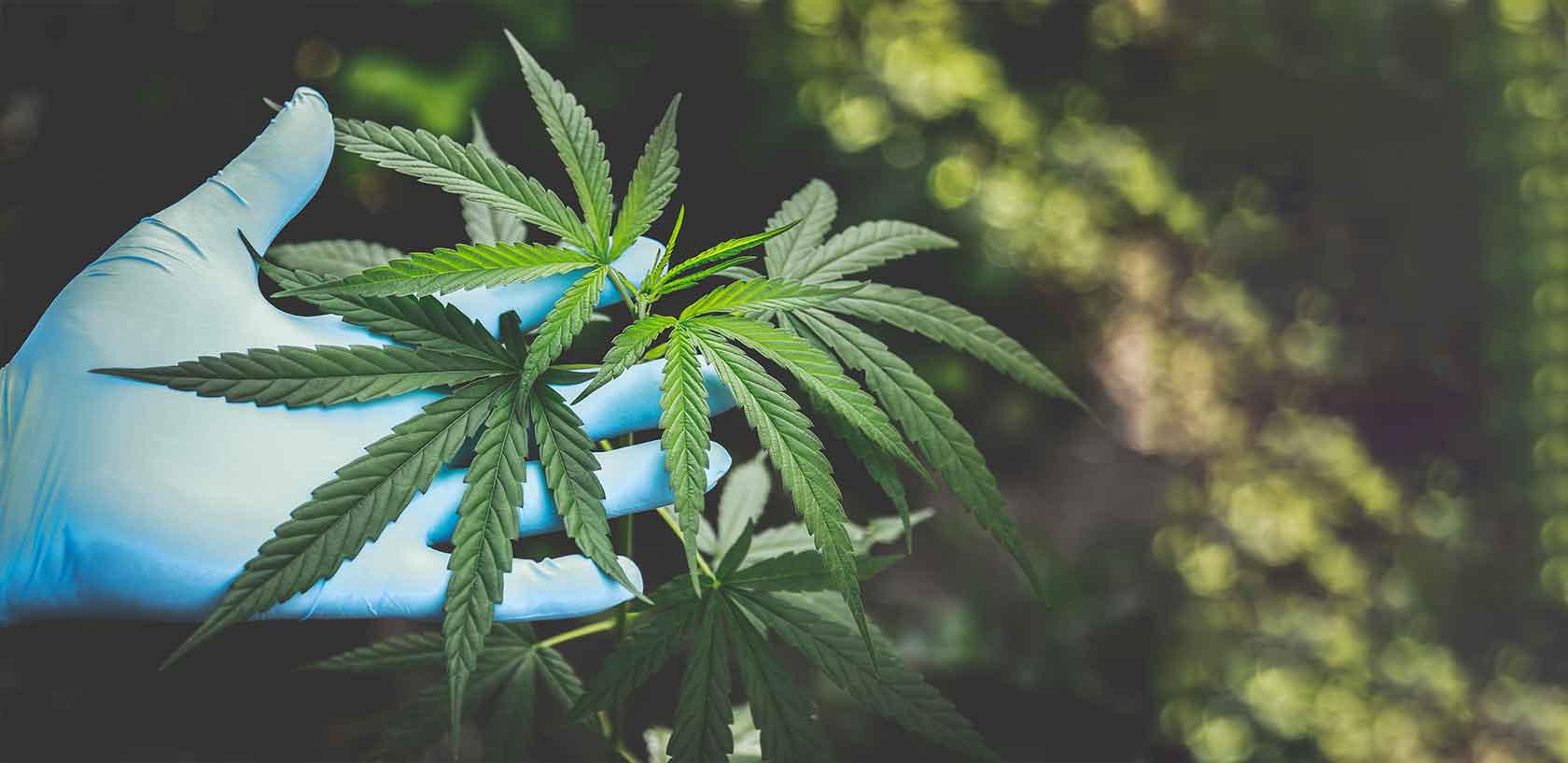
Why Woke Botanicals stands for wellness and wholeness
Hemp deserves better than political fearmongering, corporate opportunism and rules that leave responsible businesses wondering what comes next.
At Woke Botanicals, our focus is hemp flower extracts and botanical wellness. We grow organically, use cold-pressed extracts and work mostly with full-spectrum formulations.
Our purpose is wellness and wholeness.
Yet our work exists within a system shaped by government decisions, commercial interests and changing legislation.
Who influences those decisions? Who benefits from restrictions? Who gets access to the market—and who gets pushed out?
Follow the money. Examine the policies. Demand accountability.
My relationship with hemp goes beyond a product label
I spent three months with Hmong people who grow, weave and use hemp in their daily lives.
I saw a relationship with the plant: cultivation, practical knowledge and skilled work. Hemp was part of everyday life, with traditions maintained across generations.
The National Endowment for the Arts documents that knowledge through Hmong weaver Yang Fang Nhu, who learned to cultivate hemp, prepare its fibers, spin thread and weave clothing.
That experience helped shape my respect for hemp. At Woke, that respect informs our work with the flower and its extracts.
Traditional knowledge deserves recognition. Modern botanical products also need clear ingredients, responsible manufacture and evidence supporting their claims.
Respect for the plant should carry through to respect for the person buying the product.
Hemp flower extracts are the heart of our work
A hemp flower extract is different from hemp seed oil. The part of the plant, extraction method and cannabinoid composition matter.
CBD itself is non-intoxicating. Full-spectrum flower extracts can also contain naturally occurring THC, so composition and dose still matter. “Full spectrum” does not mean THC-free.
Extracting compounds already present in a flower is different from chemically converting cannabinoids to manufacture another ingredient.
FDA explains that commercial delta-8 production commonly involves converting cannabinoids such as CBD. It has raised concerns about potentially harmful by-products, contamination and uncontrolled manufacturing conditions.
Independent laboratory testing is essential. Chemical conversion is a separate manufacturing process.
Customers deserve to understand those distinctions. Manufacturers should explain them clearly.
Washington wanted horror stories
The history of American cannabis policy deserves more scrutiny than a tidy official summary.
A transcript of a January 14, 1937 Treasury meeting, with Harry Anslinger present, records officials discussing cannabis legislation, industrial uses and the case they would present.
Treasury lawyer S. G. Tipton asked for:
“horror stories — that’s what we want.”
Later, he discussed building up the case using those stories. Officials also discussed a prohibitive transfer tax.
These were people preparing legislation. That deserves a bloody hard look.
The meeting included scientific uncertainty and discussion of exemptions for legitimate uses. Yet that uncertainty existed alongside the search for frightening examples.
In subsequent congressional hearings, Anslinger presented stories linking cannabis with violent crime and mental disturbance.
A government position gives an argument authority. It does not make it reliable.
Financial barriers can remove access
Money matters because legislation changes what businesses can afford to supply.
During the 1937 hearings, S. L. Hilton, representing the American Pharmaceutical Association, objected to registration costs and purchasing requirements. Although he supported legislation generally, he told Congress that the burdens would lead him to destroy his cannabis stock and refuse prescriptions containing it.
That is a concrete economic consequence.
Make a product sufficiently expensive or difficult to handle, and businesses may stop providing it.
The American Medical Association separately objected to restrictions that would obstruct medicinal use.
The Marihuana Tax Act imposed a restrictive framework, although mature stalks and certain other materials were exempted. It was not a straightforward ban on every hemp material.
Permission on paper means little if the practical burden drives people out.
Small growers and independent manufacturers still face that problem.
Corporate interests deserve investigation
A widely circulated account alleges that industrial interests helped suppress hemp to protect competing products, including paper and synthetic fibers. Versions name William Randolph Hearst, Andrew Mellon and DuPont.
The alleged financial relationships and coordinated campaign remain disputed. The evidence reviewed here does not establish that those interests directed the 1937 law.
But commercial influence deserves examination.
Who financed whom? Who lobbied? What correspondence survives? Which commercial advantages can be connected to identifiable actions?
Commercial benefit is a lead. A documented intervention is evidence.
Government accounts should face scrutiny. Claims challenging them should face scrutiny too. Readers deserve information they can assess.
When government priorities changed, hemp became useful again
During the Second World War, USDA promoted hemp cultivation through Hemp for Victory. The government’s archive preserves the film.
The plant’s usefulness had not suddenly appeared. Government priorities had changed.
Farmers and businesses living with those decisions deserve an explanation of the consequences—and the contradictions.
They deserve more than another political slogan.
Hemp returns—and companies exploit the legal definition
The 2014 Farm Bill permitted certain hemp research programs. The 2018 Farm Bill broadened lawful production under an agricultural framework, while retaining FDA’s authority over consumer products.
That opened opportunities for growers and botanical businesses.
It also created room for companies selling intoxicating products under interpretations of the hemp definition.
The crucial detail is this: the 2018 threshold was 0.3% delta-9 THC by dry weight. It was not a maximum THC dose per item.
For illustration, 0.3% of a five-gram dry product is 15 milligrams. A small percentage can represent a substantial quantity. That arithmetic alone does not establish legality or safety.
Some businesses used the legal category to market products formulated for intoxication. Others pursued chemically converted cannabinoids.
Those products should not be treated as interchangeable with hemp flower extracts formulated for botanical wellness.
The word “hemp” cannot replace an honest explanation of what is in the finished product.
Alcohol interests have pushed for restrictions
The Beer Institute, an alcohol-industry trade association, publicly supports closing the intoxicating-hemp loophole. Its published policy also advocates dispensary-only sales for intoxicating hemp and cannabis products.
That is a named industry organization advocating restrictions that would remove products from existing sales channels.
Its role belongs in the discussion of who is pushing to restrict hemp-derived THC.
The evidence does not establish that every alcohol company supports a blanket hemp ban. Specific organizations should be identified and held accountable for the restrictions they seek.
Marlboro’s parent company is involved too
Altria—the parent company of Philip Morris USA, the business behind Marlboro in the United States—has substantial interests in both tobacco and cannabinoids. Its own corporate information identifies Marlboro and its investment in Cronos.
Reporting based on third-quarter 2025 federal lobbying disclosures identified Altria Client Services’ lobbying on FDA tobacco and cannabis product enforcement policy.
Altria also held 41% of cannabinoid company Cronos at December 31, 2025. Under specified ownership and board-size conditions, its agreement entitled it to nominate four of seven directors.
That is a major tobacco business with a financial stake inside the cannabinoid market and a presence in policy discussions.
Its commercial interests deserve scrutiny. What enforcement policies does it seek? How would those policies affect its investments? What would they mean for independent growers and botanical businesses?
The available disclosures establish lobbying and a substantial investment. They do not establish that Altria sought a blanket hemp or THC ban.
We should distinguish documented lobbying from a position we cannot substantiate. That makes the questions sharper: which restrictions are companies seeking, and whose businesses would those restrictions benefit?
Hold irresponsible manufacturers accountable
I have no patience for misleading labels, reckless manufacture or businesses that treat customer confusion as a sales strategy.
Customers deserve to know:
Products intended for intoxication should be identified plainly and kept away from children. FDA has specifically raised concerns about child-appealing delta-8 packaging and accidental exposures.
A gummy is a delivery format. Its ingredients, formulation, dose and manufacture determine what the customer is buying.
A botanical image on the packaging is not a guarantee of integrity.
Hold government accountable too
I welcome action against deceptive marketing and irresponsible manufacture.
But broad restrictions can catch responsible businesses as well.
The Congressional Research Service’s September 28, 2026 update describes changes beginning November 12, with most delayed until December 11. They include restrictions on certain manufactured cannabinoids, a total-THC standard and a 0.4-milligram combined limit per retail container for total THC and similar-effect cannabinoids in finished cannabinoid products.
That can affect full-spectrum products containing naturally occurring THC, even where intoxication is not their intended purpose.
Government should demonstrate how its rules protect customers, distinguish products and allow a workable future for responsible growers and manufacturers.
Public protection should withstand scrutiny. So should every commercial interest asking government to change the rules.
If corruption is alleged, investigate the particular conduct, financial relationships and decisions. Show readers what can be established.
Where Woke Botanicals stands
Woke Botanicals stands for wellness and wholeness.
We grow organically and use cold-pressed hemp flower extracts. Much of our range is full spectrum, reflecting our approach to the plant’s naturally occurring mixture of compounds.
Our purpose is botanical wellness. We are not building a business around intoxicating loopholes.
We care about cultivation, formulation, transparency and the person choosing our products.
Organic growing and cold pressing do not replace finished-product testing or compliance. Clear information and responsible practices remain essential.
Our commitment is to uphold our standards and comply with the requirements that apply to what we sell. If changing rules require adjustments to a formula, label or offering, we will explain them honestly.
Our values are not for sale. Explore our Woke Botanicals and botanical wellness range, find your evening wind-down ritual, or learn about body care and recovery rituals.
Hemp deserves better than fearmongering and commercial opportunism.
You deserve to know what is in your product, how it was made and what supports the claims on its label.
And when government or industry asks for your trust, you are entitled to ask whose interests are being served—and to see the evidence.